Maryland roof inspection and condition report checklist
A useful roof inspection does more than produce a quick yes-or-no opinion. It should document the areas reviewed, identify visible defects and limitations, and explain why a repair, monitoring plan, or replacement is being recommended. This guide helps Maryland homeowners prepare for the visit and evaluate the findings.
What do you need the roof assessment to answer?
Use the reason for the visit to explain the work you are considering. These prompts help a roofing contractor understand the problem before discussing an appointment.
A leak or storm damage
Explain when it started, the affected room or roof area, and any earlier repair. Ask how the contractor will investigate the entry point and separate temporary protection from the proposed repair.
Prepare for a roof-leak assessmentA recurring problem
Have previous invoices and photos ready. Ask which earlier repair failed, what evidence supports a different approach, and what cannot be confirmed until materials are opened.
Questions for the condition reportPlanning repair or replacement
Share the known roof age, material and repair history. Ask for the observed reason for each option, what can be retained, and a separate written scope and price for the recommended work.
Compare repair and replacement scopesBuying a home or seeking an independent report only? Confirm the required report with your transaction professional and choose an appropriately qualified inspector. Maryland has a separate home-inspector licensing category. This roofing referral line does not promise independent inspections, transaction certifications or engineering reports. Read Maryland’s home-inspector classification.
Stay off the roof. Steep slopes, fragile materials, moisture, loose debris, and concealed damage can create a fall hazard. Make ground-level notes and leave roof access to a professional with the appropriate safety equipment.
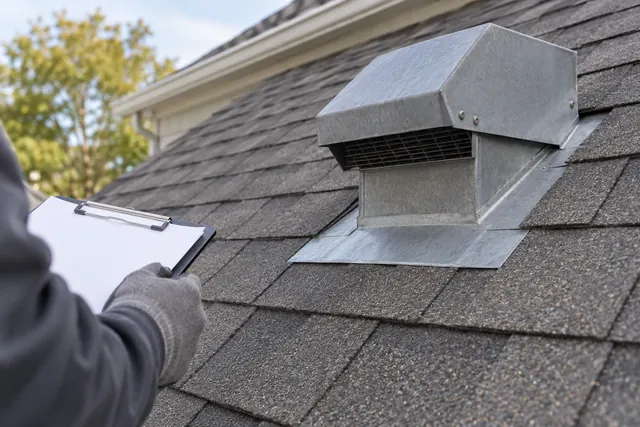
When a roof inspection can be useful
- After wind, hail, falling limbs, or other severe weather
- When a leak, ceiling stain, musty odor, or damp insulation appears
- Before deciding between a limited repair and full replacement
- When repeated repairs have not solved the same problem
- While evaluating a home purchase or planning a major exterior project
Urgent conditions should not wait for a routine appointment. If water is near electrical fixtures, a ceiling is sagging, or a tree has affected the structure, keep people away from the area and contact the appropriate emergency, utility, or qualified building professional.
If water is actively entering the home, follow the safer first steps in our Maryland roof-leak repair guide.
What the exterior assessment should address
The exact method depends on the roof type, height, slope, weather, and safe access. Ask the inspector to state which areas were viewed directly, from a ladder edge, with a camera, or from the ground. A residential assessment may include:
- Roof covering: missing, displaced, cracked, worn, punctured, or lifted materials and uneven areas.
- Edges and transitions: eaves, rakes, valleys, ridges, roof-to-wall intersections, and changes in slope.
- Flashing and penetrations: chimneys, plumbing vents, skylights, exhaust vents, and other openings.
- Drainage: gutters, downspouts, scuppers, drains, and evidence that water is not leaving the roof as intended.
- Visible substrate concerns: soft-looking areas, sagging, open seams, or conditions that may justify closer structural evaluation.
What can be checked inside
When the attic or upper interior is safely accessible, the inspection may look for water staining, active moisture, damaged sheathing, daylight through openings, compressed or displaced insulation, and ventilation conditions. Interior staining does not always sit directly below the entry point because water can travel along decking, framing, or fasteners.
What a useful roof condition report should contain
A written inspection is easier to compare and act on than a verbal conclusion. Request:
- The inspection date, roof areas reviewed, and access method
- Photographs tied to specific roof slopes or components
- Observed defects, their location, and any immediate safety concern
- Areas that were inaccessible or outside the inspection scope
- The reason behind each repair, monitoring, or replacement recommendation
- A separate written work scope if corrective work is proposed
Turn a recommendation into questions you can compare
- “Repair the flashing”
- Which penetration or wall intersection is affected? Ask for a location or photo reference and a description of the proposed repair.
- “Replace the roof”
- Which observed conditions support replacement? Ask why a limited repair is unsuitable and whether the recommendation covers every slope or only part of the roof.
- “No problem found”
- Which areas were actually viewed, and under what conditions? Ask whether inaccessible areas or a leak that appears only during rain need follow-up.
These are examples of questions to ask, not findings about your property. Keep the original report and request clarification in writing.
If replacement is recommended, ask why a targeted repair is not considered practical. If repair is recommended, ask how the work will connect with the existing system and which underlying conditions might change the scope once work begins. Our repair-versus-replacement guide provides a side-by-side decision checklist.
Confirm the inspection fee and what you receive
Before agreeing to a visit, ask whether the price covers assessment only, a written report, photographs, leak investigation or a repair estimate. Confirm any separate travel, diagnostic or follow-up charge and whether you receive the findings even if you do not hire the company for repairs. Obtain permission and pricing before additional work begins.
If an offer mentions a “17-point” or other numbered inspection, ask for the actual item list, access limitations and report format. The number of checklist items alone does not explain the scope. A ground-level review, an attic review and an investigation that opens materials are different services; agree on what is included.
Inspection, estimate, permit inspection, and insurance review are different
A contractor’s condition assessment supports a proposed scope of work. A home inspector evaluates the roof as one part of a broader property inspection. A local code inspection relates to permitted work and applicable requirements. An insurance adjuster evaluates a reported loss under the policy. One visit does not automatically replace the others.
A roofing contractor can document conditions and estimate work, but should not promise that an insurer will pay. The Maryland Insurance Administration says coverage depends on the cause of damage and the policy’s limits, deductible, exclusions, and loss-settlement terms.
Read Maryland’s roof-insurance guidance
What to have ready before calling
Start with: “My property is in ZIP ___, the concern is ___, and I noticed it ___. I’m considering repair or replacement and want to understand your assessment process.” Then ask who performs the visit, what it costs, what written findings are included and when the provider can confirm an appointment.
- Write down when you first noticed the issue and whether it changes during wind or rain.
- Gather earlier invoices, warranties, repair photos, and known installation details.
- Clear safe access to the attic hatch and affected upper rooms if practical.
- Point out every stain or leak history, even if an area is currently dry.
- Ask who will inspect the roof, what the scope includes, and whether findings will be provided in writing.
Verify the professional before authorizing work
An inspection may lead directly to a repair proposal, so treat the next step as a hiring decision. Maryland’s Home Improvement Commission advises homeowners to verify licensing, request a current liability-insurance certificate, check references, use a written contract, and confirm permit responsibility. Use our Maryland contractor checklist before signing.
Maryland roof inspection FAQs
What should a Maryland roof inspection include?
The scope should be stated before the inspection. A useful assessment commonly addresses accessible roof coverings, edges, flashing, penetrations, drainage, visible deck or structural concerns, and signs of moisture inside the attic or upper rooms when those areas are accessible.
Can I inspect my roof from the ground?
You can note visible conditions from a safe location, such as displaced shingles, debris, damaged gutters, or stains indoors. Do not climb onto the roof to investigate. A roofing professional can decide what access and safety measures are appropriate.
Does a roof inspection tell me whether insurance will pay?
No. An inspection can document observed conditions and a contractor can propose repairs, but only the insurer can make a coverage decision under the policy. Ask the contractor to separate observations from assumptions about coverage.
Should I get the inspection findings in writing?
Yes. Ask for dated findings that identify the areas reviewed, observed defects, photographs when available, limitations on access, and the basis for any repair or replacement recommendation.
Does a free roofing estimate include a condition report?
Ask before booking. An estimate may describe proposed work and its price without supplying a separate condition report. Confirm the assessment fee, what photos and findings you receive, and whether the report is available if you do not purchase repairs. Maryland Roof Connect does not set provider fees or promise a free inspection.
This guide provides general consumer information, not structural, engineering, legal, code, or insurance advice. Inspection scope, access, building conditions, local requirements, and insurance policies vary.
Discuss a roofing repair or replacement assessment
Have your ZIP code, roof concern and repair history ready. The receiving provider confirms service fit, availability, fees and scope. Maryland Roof Connect is a referral publisher, not the inspecting contractor. Paid referrals through a partner network.
Call (833) 920-0401